Shelby Township Epoxy Flooring
Decorative Flake Epoxy · Shelby Township

Decorative Flake and Chip Epoxy Floors in Shelby Township, MI

Vinyl chips thrown to rejection over a wet base, locked in under polyaspartic. The most common home finish for real reasons.

1 day installs · typical timeline
Free · 24-hour response

Free Decorative Flake Epoxy quote.

Response under 24 hours. No spam. Contact info is used only to send the quote.

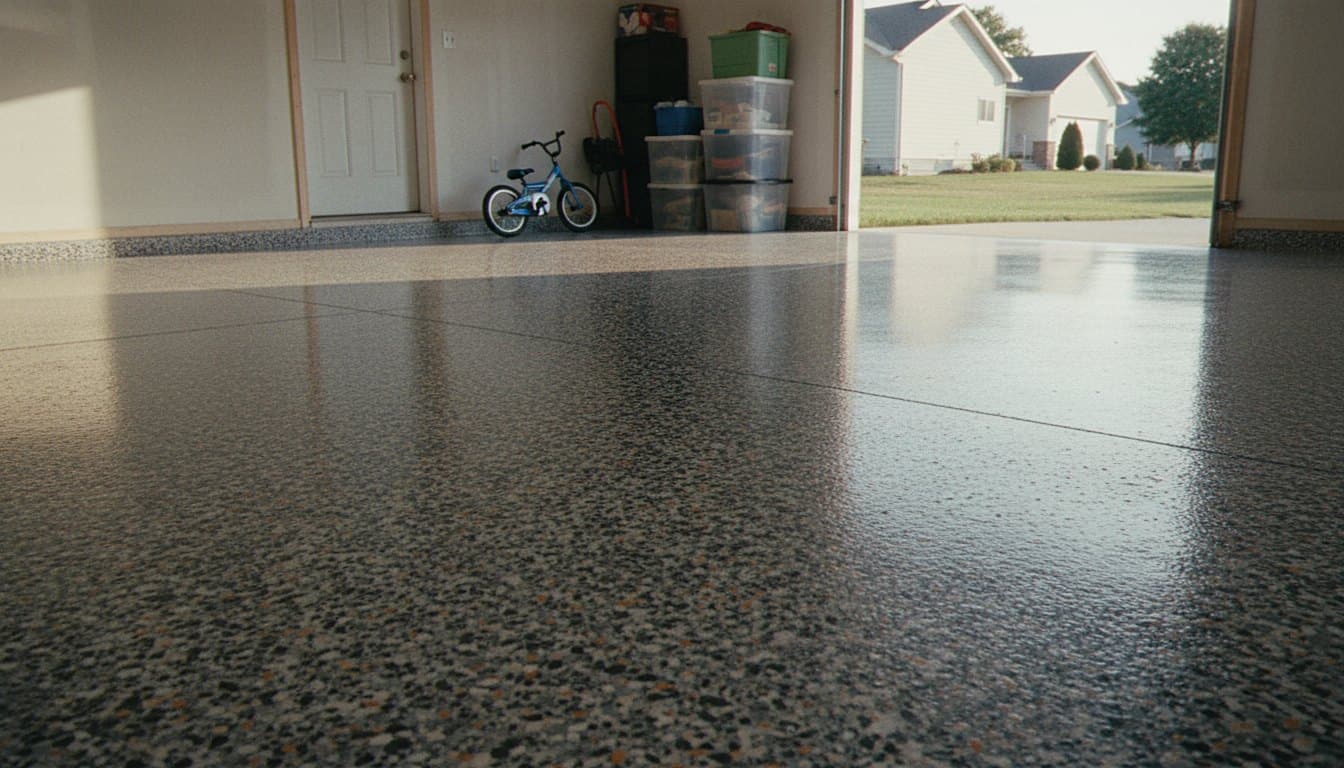
Dense charcoal, cream and copper flake epoxy garage floor.
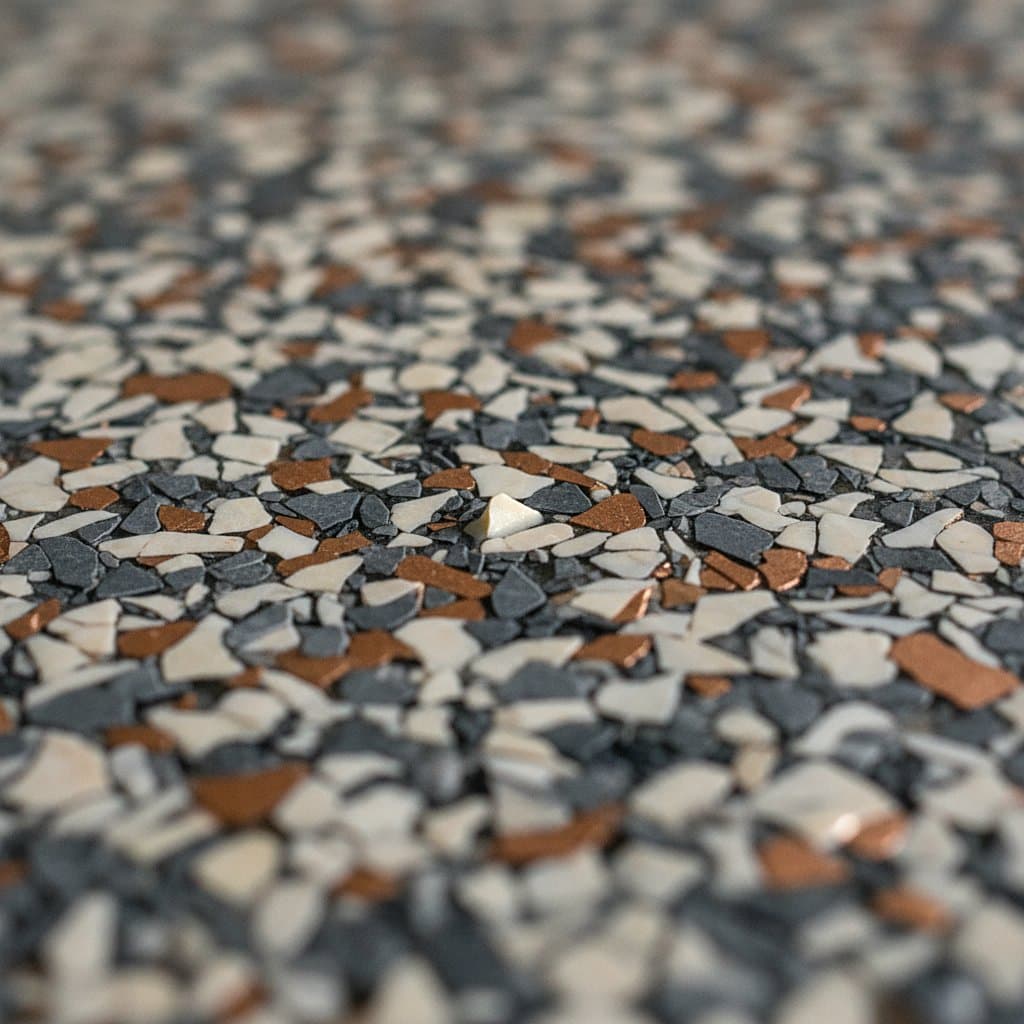
Macro of dense charcoal, cream and copper flake field.
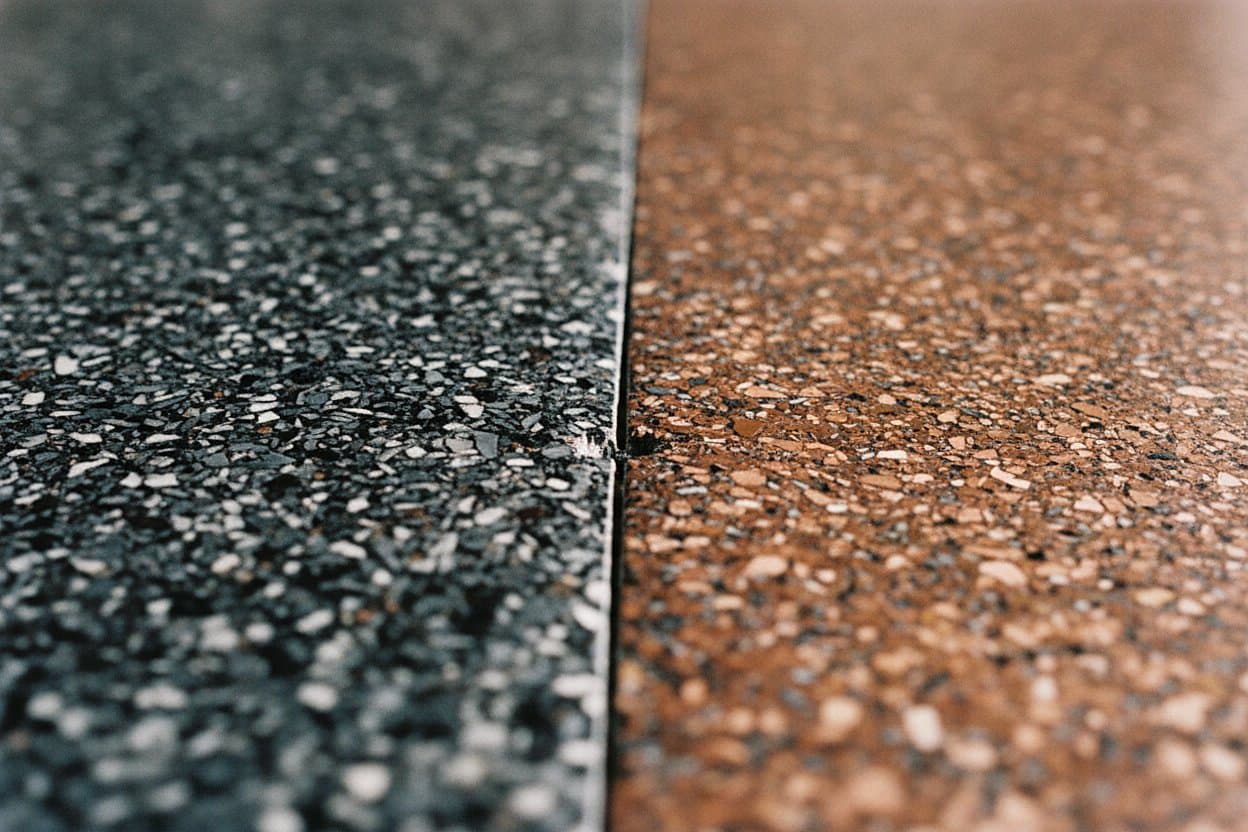
Clean line where two flake blends meet on floor.
What we install

Why most Shelby Township garages end up with flake

If a finished epoxy floor has been seen in person and not just in a phone photo, it was almost always a flake or chip system. A full broadcast of vinyl flake is the popular home finish for a list of real reasons. The texture adds grip underfoot. It is not a smooth sheet when wet. The chip pattern hides scuffs, tire marks, and the small flaws every older Shelby Township garage carries. The depth reads richer than a solid pigment epoxy ever does. And the texture is more forgiving of an aged slab than a glassy metallic, which needs a near perfect surface.

A quality install throws the flake to rejection. That is the trade term for keeping the throw going until the wet base coat can no longer absorb another chip. That sustained throw is what makes the dense, textured look. A sparse throw reads as a pebble pattern. The morning after cure, loose excess gets scraped up with a wide push broom. The flake locked into the base gets sealed under polyaspartic. Stock blends in this region run from charcoal and cream earth tones through warmer copper and walnut mixes. Custom blends get mixed to match cabinet color, wall paint, or brick on request.

  • Throw continues until the wet base rejects more flake. That full coverage is what kills the thin pebble look.
  • Hides scuffs, tire ghosts, hairline cracks, and the small flaws every old garage has.
  • Texture adds grip when boots track in salt brine in late February.
  • Custom blends get mixed to a cabinet door, paint chip, or fabric swatch at no extra cost.
  • A standard garage sized for two cars finishes the install in one working day.
Flake floors look better as they age. Solid pigment epoxy starts at peak and only loses ground.

Most flake work in the Shelby Township footprint lands in home garages, basement entry zones in finished rooms, and the occasional mud room threshold. Stock blends usually carry the garage installs. Finished basements often go custom to read with the rest of the room. The kitchen cabinet color. The bar backsplash. The rug in the next seating area. Holding real flake samples in the actual lighting beats guessing from a screen by a wide margin.

When choosing between a solid floor and a flake floor, most homeowners pick flake once both options are in front of them on real sample boards. A reputable local installer brings the boards to the home visit.

Materials

Broadcast to rejection, in plain terms

The look of a flake floor is almost entirely about throw density. The chips are small pieces of vinyl. A quarter inch is normal for a home job. Up to an inch is normal for a commercial decorative install. The chips are blended into custom color mixes at the maker. The chips do not bond to either the resin or the slab. They get mechanically locked into the wet epoxy base by gravity and by the surface tension of the wet resin gripping each chip as it lands. A partial throw leaves base coat showing between chips. That reads as a speckled pebble look. A full throw keeps going until the wet base will not accept another chip. That is the dense field most people picture when they imagine a real flake floor.

The install itself is more choreographed than complicated. Once the solids epoxy base is rolled flat, two crew members work from opposite corners of the room. They throw the blended chip mix overhand in arcing patterns that overlap. The throw style matters. A straight overhand throw piles chips in a tight zone. A windmill spread covers more evenly. The throwing keeps going until the wet base reads as fully saturated. That is the rejection moment. The next morning, loose excess (whatever did not bond into the wet film) gets scraped up with a wide push broom and vacuumed away. The chip layer locked into the film gets sealed under polyaspartic. The topcoat fills the texture gaps and gives the floor the depth that makes a flake floor read as a finished surface, not a coated one.

  • Throw continues until the wet base will not accept another chip. A pebble look means short throw.
  • Stock blends: charcoal and cream, copper and walnut, warm earth. Custom blends at no extra cost.
  • Two crew, arcing throws from opposite corners. Coverage overlaps in the middle of the room.
  • Morning after: scrape loose excess. Seal the locked chip layer under clear polyaspartic.
What about the alternatives?

Flake measured against the other home finishes

When a homeowner is choosing between home finish options, the choices usually are solid color, a sparse speckle, full flake broadcast, and a designer metallic. The five rows below describe what each delivers in daily use.

Solid color epoxy

Cleanest and most modern at install. Shows every scratch, scuff, and tire ghost inside year one. Looks worse as it ages.

Acceptable

Sparse decorative speckle

Cheapest decorative pass. Reads as undershot next to a full throw. Hides nothing on the slab.

Skip

Full flake broadcast

The popular home choice, for reason. Forgives small slab issues. Scratches read inside the texture. Custom blends match any room.

Recommended

Quartz broadcast (vinyl alternative)

Premium commercial pick. The quartz is heavier and grips harder underfoot. Higher cost. Narrower color palette.

Acceptable

Metallic epoxy

Highest visual depth, fullest swirl drama. More expensive. Scratches show against the gloss. Best in a polished room.

Recommended
How it goes

From quote to walk-on, fast.

STEP 01

Free Quote

Submit a few photos or book a free 15-minute on-site visit. The result: a fixed written quote, not an estimate range.

STEP 02

Floor Prep

Diamond-grind the slab, patch every crack, vacuum-fill control joints, and prime against moisture vapor.

STEP 03

Coating

100% solids epoxy base, a full flake broadcast for grip and depth, then a polyaspartic topcoat.

STEP 04

Cure & Enjoy

Walk on it the same evening. Park on it 24 hours later.

Before you book

Worth confirming before signing a flake quote

Most flake disappointments come from picking the wrong color blend or thinking every flake job is the same. The questions below catch both.

Flake palette trends move slower than people expect. Charcoal, grey, cream, and earth blends, warm copper walnut mixes, and brown and beige variations have been the home standard for over a decade. They still read as current today. The floors that look dated are the ones built around a high contrast specialty blend (electric blue with white, bright red on black) keyed to one year. For an install that has to last, the neutral palette is the safer bet.
Yes, and most reputable installers offer custom blending at no upcharge on home work. A cabinet door, paint chip, or fabric swatch comes to the home visit. The installer blends vinyl chip from maker stock by hand to match the target color. Custom blends are normally mixed in bags of five to ten pounds so the installer carries one color across the whole floor. Larger spaces order more bags from the same batch to avoid lot drift.
Messy for one day, that is all. After the throw, excess chip coats the entire wet floor in an even layer. The next morning the excess gets scraped with a wide push broom and vacuumed away. The finished surface shows underneath. The garage door stays closed through cure so wind does not push the loose chip across the yard. Cars stay off the driveway near the door overnight. Some chip blows out when the door opens the next morning.
Static hairline cracks, yes. The polyurea crack repair below plus the chip texture above makes them invisible. Active cracks (the slab is still moving with temperature), no. No chip density will hide a crack that keeps moving. The first site visit should sort which type of crack each line is. Active cracks may need an expansion joint detail. The coating stops at the joint and starts again on the other side. The crack does not get bridged.
A full color change means grinding the entire coating off and starting fresh on the slab. A small shift (more depth, a new accent color) can run as a light sanding of the existing topcoat plus a thin recoat with new chip at lower density. The original blend underneath still shows through. The new pass adds richness on top. Most homeowners who reach a decade and consider recoating end up picking the same blend they had. The floor has aged into a look they like.
Aftercare

What daily life with a flake floor looks like

Flake floors are the most forgiving home surface available when it comes to daily abuse. The vinyl chips trapped under polyaspartic act as a visual buffer against scratches, scuffs, salt staining, and the ghosts hot tires sometimes leave on a fresh epoxy. A scratch on a solid pigment floor reads as a clean light line across a dark field. The same scratch on a flake floor lands inside the pattern and almost vanishes. Daily care is genuinely minimal. Most homeowners undershoot the routine compared to what a hardwood or polished concrete would ask of them.

  • Sweep weekly with a soft broom. Salt grit in winter is the only abrasive that builds up.
  • Damp mop once a month with a pH neutral cleaner or plain water. The chip texture keeps residue down.
  • Wipe spilled fluids (oil, brake, antifreeze) within a day. Left for weeks they can leave a faint ring.
  • An annual deep clean with a soft vacuum brush lifts trapped grit out of the texture better than mopping alone.
  • If a chip pops loose, rare and usually only under a heavy point load or chemical spill, the installer can patch while the original chip batch is still in stock.
Dense charcoal, cream and copper flake epoxy garage floor.
FAQ

Frequent questions about flake floors

We build our floors in layered coats, and that careful stack of primer, base, and top coat is the whole reason they hold up here. A primer grips the bare slab. A thick base coat carries the color flake and gives the floor its body. Then a polyaspartic top coat seals the whole thing and takes the daily wear for you. Built that way, a floor in this area holds up for years before it ever needs a fresh top coat. The soft box store kits skip the moisture primer to save a few dollars, so most of them peel inside two or three winters.
Epoxy and polyaspartic do two different jobs inside the same floor. Epoxy is the base layer that grips the slab and builds the thickness you can see. Polyaspartic is the clear top coat above it, and that coat is what gives the floor its hardness, its shine in daylight, and the fast cure that lets us pour on one day and hand you the floor the next. A floor with only epoxy on it stays softer and slowly yellows in the sun. We always pour both so each layer can do the part it is good at.
Three things set the price. The first is the size of the floor. The second is the shape of the slab sitting under it, and the third is the finish you pick. A slab carrying deep cracks, old oil stains, or heavy damp needs far more prep work, so the number runs higher. Metallic pours and dense flake blends sit at the top end of the range. We never quote a loose range over the phone, because that number is almost always wrong. Instead we come look, read the slab in person, and write one clear price after a free walk through.
Yes. The work is all indoors, so as long as the garage holds its heat through the cure, the time of year does not stop us at all. On the coldest days we simply run a heater for a few hours while the top coat sets up. Spring and fall fill up fast around here. Because of that, winter often gives you the shorter wait if you want a fresh floor down before the next salt season hits.
Hot tire pickup is the exact thing that kills cheap coatings. A fully cured polyaspartic top coat is harder than the rubber of a tire, so it holds tight to the base layer even after a long July drive home on the highway. The soft paint kits lift off in patches the moment a hot tire parks on them. That is the failure we build every floor against, coat by coat, right from the prep.
Ready when you are

Ready to get started in Shelby Township?

Send a few photos or book a quick on-site walk-through. A fixed written quote within one business day.

Call NowFree Quote