
Polyaspartic and epoxy are not the same product
That catch all phrase epoxy floor papers over a real split. Run pure epoxy as the top layer and the sun slowly turns it yellow. A hot stretch in July leaves it soft and tacky. On top of that it wants one to three days to harden before anything heavier than a sneaker rolls across it. Polyaspartic was designed to dodge all three of those traps. It is also the reason our crew can wrap a floor in one day rather than dragging it out over the better part of a week.
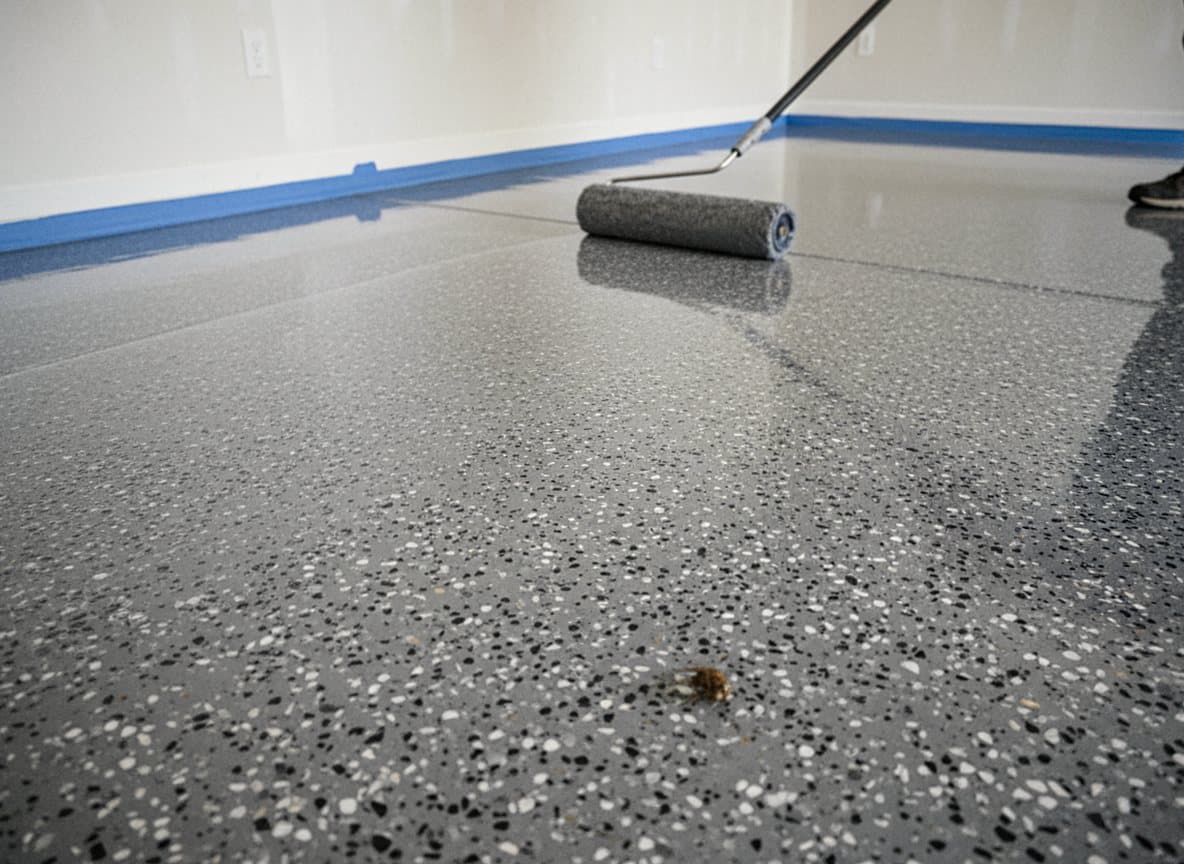
We lay polyaspartic as the last coat, right over the cured flake base. The crew rolls it thin and even, in one or two passes, so the film reads clear and level. It grabs the epoxy under it on a chemical level, so the two layers fuse into one. Because it cures with the moisture already in the air, the floor is ready to walk on in about two hours. That fast turn is what lets us wrap the whole job in a single day instead of stringing it across most of a week.
- We finish the floor in one day, and you park on it the next morning.
- It stays clear under sunlight, where a plain epoxy topcoat turns yellow by July.
- It cures hard enough to shrug off hot tire pickup that lifts soft floors.
- Bonds chemically with the epoxy underneath. No weak plane between the layers.
- Comes in matte, satin, and high gloss, plus a version with a grit additive that grips when the floor is wet.
When you call around for quotes in Shelby Township, the most useful single question is this. Is the topcoat polyaspartic, or just another coat of epoxy? We are happy to point you at the data sheet for the product we put down. The honest gap between a floor that gives out in a few winters and one that keeps going often comes down to this one line.
If a polyaspartic floor is on your list for a Shelby Township garage, send a few photos through the form here. We set up a free walk through.